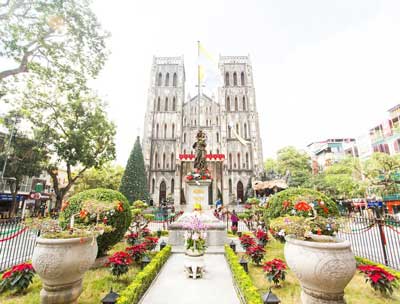
Visiting Hanoi would not be complete without a stop at Hoan Kiem Lake. It is a favorite destination for both locals and visitors seeking a peaceful escape from the city's vibrant atmosphere. The area is also home to many historic landmarks that hold great cultural and historical significance for the Vietnamese people. Begin your walking tour at the Hanoi Post Office, easily recognized by the large clock on top of its tower.
From there, cross the street to discover the first historical landmark.
1. Hoa Phong Tower by Hoan Kiem Lake
This small structure is often overlooked. Even many Vietnamese visitors are unaware of its history unless guided by a local. Although Hoa Phong Tower is just a modest brick tower standing quietly beside Hoan Kiem Lake, it is the last surviving remnant of a much larger historical complex.
In fact, Hoa Phong Tower was originally part of Bao An Pagoda, which was built in 1842.
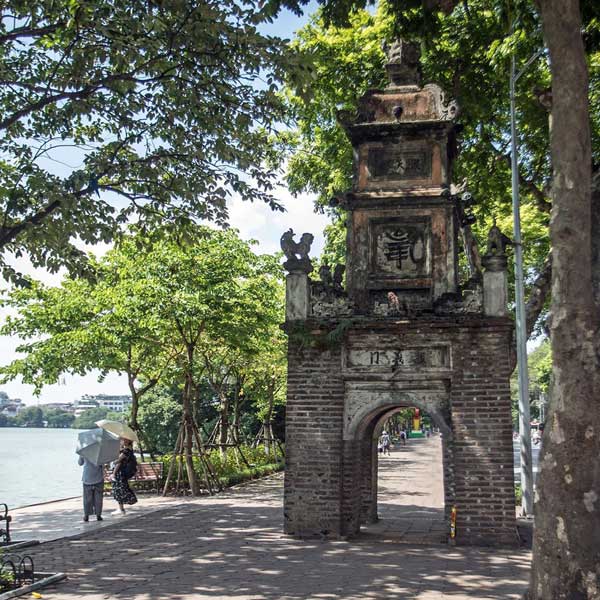
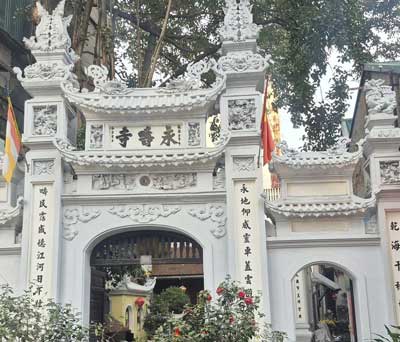
In the late 19th century, most of Bao An Pagoda was demolished to make way for administrative buildings and new roads. Fortunately, Hoa Phong Tower survived. Built entirely of brick, the tower consists of three sturdy levels, each featuring arched doorways on all four sides. At the top, the three Chinese characters "Hòa Phong Tháp" (Hoa Phong Tower) remain clearly carved into the stone. Although modest in size, the tower retains a timeless charm and stands out beautifully against the modern surroundings of Hoan Kiem Lake.
>> 5 Pagodas in Hanoi Old Quarter
After taking a few photos at Hoa Phong Tower, continue your walk toward the nearby group of historic landmarks consisting of Pen Tower, The Huc Bridge, and Ngoc Son Temple. Since the temple sits on an island in the middle of the lake, it is very easy to spot from a distance.
2. Pen Tower, The Huc Bridge, and Ngoc Son Temple
Alongside Turtle Tower, the complex of Pen Tower, The Huc Bridge, and Ngoc Son Temple represents some of the most iconic landmarks associated with Hoan Kiem Lake. Let's explore each one in turn.
Pen Tower
Built in 1865, Pen Tower resembles a giant calligraphy brush pointing toward the sky. At its base stands the Ink Slab Pavilion, designed in the shape of an inkstone resting on the backs of three stone toads. Although the architecture is relatively simple, the monument carries profound symbolism, representing Vietnam's long-standing tradition of learning and respect for education.
The Huc Bridge
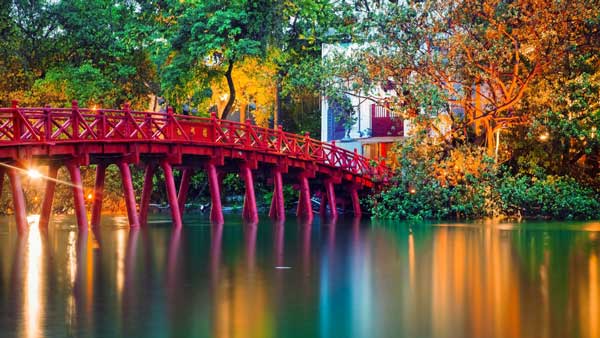
After passing the Ink Slab Pavilion, you will cross The Huc Bridge, a graceful red wooden bridge connecting the lakeshore to Jade Island. Its brilliant red color contrasts beautifully with the emerald waters of Hoan Kiem Lake, making it one of Hanoi's most recognizable and photographed landmarks.
Ngoc Son Temple
Located on Jade Island in the middle of Hoan Kiem Lake, Ngoc Son Temple is one of Hanoi's most important spiritual sites. What makes the temple unique is that it honors multiple belief systems, including Confucianism, Buddhism, Taoism, as well as the national hero Tran Hung Dao. The temple also offers one of the most picturesque viewpoints overlooking Hoan Kiem Lake.
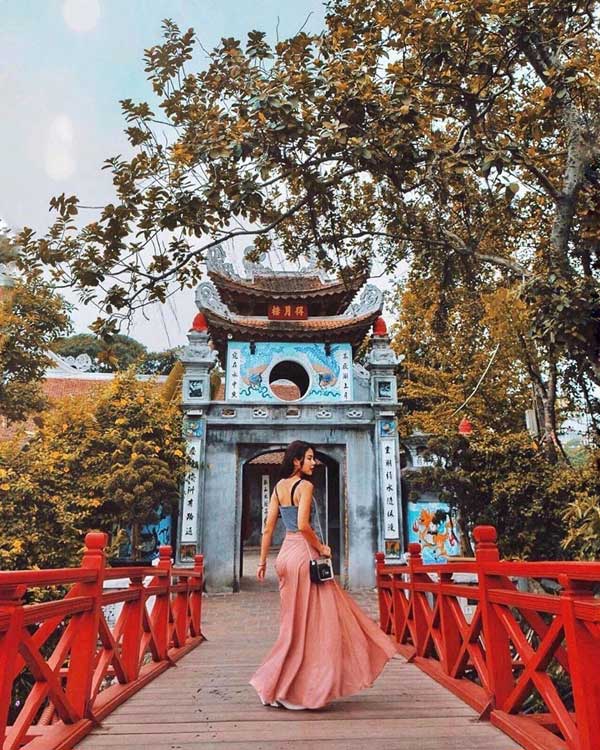
As you leave Ngoc Son Temple, you'll notice a small, ancient-looking building across the street. It stands out from the surrounding modern architecture, so don't continue walking just yet—cross the road and pay it a visit.
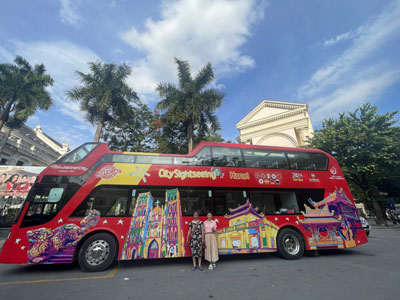
>> Hanoi 2-Deck Bus - Hop-On Hop-Off Vietnam Sightseeing
3. Ba Kieu Temple
Standing opposite Pen Tower, Ba Kieu Temple may not immediately catch your eye, yet it has stood here for more than 400 years.
The temple is a remarkable example of Mother Goddess Worship, one of Vietnam's most important traditional folk beliefs.
Its architecture is elegant and harmonious, featuring weathered tiled roofs, sturdy wooden frames, finely carved decorative details, and lacquered-and-gilded horizontal boards and couplets. Inside, the gentle scent of incense creates a peaceful atmosphere that feels worlds away from the lively streets surrounding Hoan Kiem Lake.
One interesting detail is that the temple and its entrance gate are separated by the lakeside road. If you look carefully, you'll notice that the gate is located on the opposite side of the street, exactly where you walked a few moments earlier.
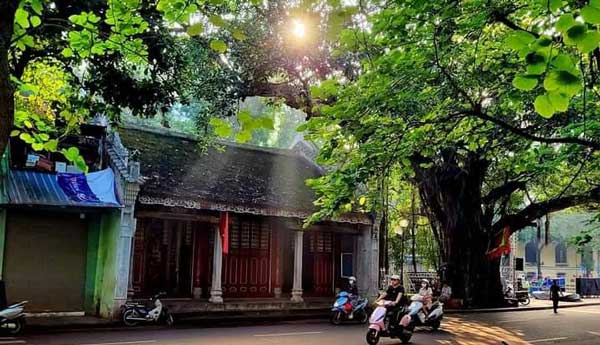
From here, simply use Google Maps to navigate to St. Joseph's Cathedral, which is only about 700 meters from Ba Kieu Temple.
4. St. Joseph's Cathedral Hanoi
Among the landmarks surrounding Hoan Kiem Lake, St. Joseph's Cathedral is the largest and most striking. The cathedral is instantly recognizable by its twin bell towers, rising nearly 32 meters high, and its impressive Gothic façade inspired by European architecture. Over the past century, its weathered stone walls have developed a beautiful mossy patina, adding even more character to this historic building.
The spacious square in front of the cathedral is a popular gathering place where both locals and visitors stop to take photos or simply enjoy the atmosphere. During Christmas, it becomes one of the most famous festive destinations in Hanoi, attracting thousands of people every year.
Step through the main entrance, and you'll immediately notice a completely different atmosphere from the lively streets outside. Soft light filtering through colorful stained-glass windows, together with the soaring vaulted ceiling, creates a peaceful and reverent space.
Inside, massive stone columns, elegant Gothic arches, and beautifully crafted stained-glass windows depicting stories from the Bible surround visitors with a sense of history and spirituality. The sanctuary is the focal point of the cathedral, featuring an intricately carved altar that blends European architectural influences with traditional Vietnamese decorative motifs.
If you happen to visit during Mass, you may also hear the cathedral bells echoing across the neighborhood while the choir performs sacred hymns, creating a truly memorable and spiritual experience unique to St. Joseph's Cathedral.
The streets surrounding the cathedral are well known for their vibrant café culture and popular local snacks, making this area a favorite hangout for young Hanoians. Be sure to try fried fermented pork rolls (nem chua rán), Vietnamese lemon tea (trà chanh), green rice (cốm), and the city's famous egg coffee.
Along Nha Chung Street, Au Trieu Street, and Ly Quoc Su Street, you'll find countless cafés, restaurants, and street-food stalls bustling from late afternoon until evening. Although many of these eateries are small, they offer the perfect setting to enjoy a plate of crispy fried fermented pork rolls with a refreshing glass of lemon tea while watching everyday life unfold in front of the cathedral square.
The neighborhood is also home to several of Hanoi's most famous egg coffee cafés. Whether you're relaxing inside a charming old house or sitting on a balcony overlooking the cathedral, a rich and creamy cup of egg coffee is an experience loved by both locals and international visitors.
If you visit between September and November, don't miss the chance to taste cốm (young green rice), a seasonal Hanoi specialty available only during autumn. Street vendors and local shops around the cathedral sell fresh green rice, green rice sausage (chả cốm), green rice cakes (bánh cốm), and many other delicacies made from this iconic ingredient.
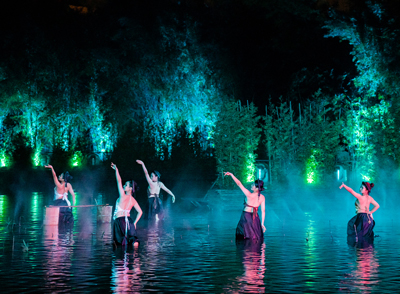
>> Where to Watch Traditional Water Puppetry in Hanoi
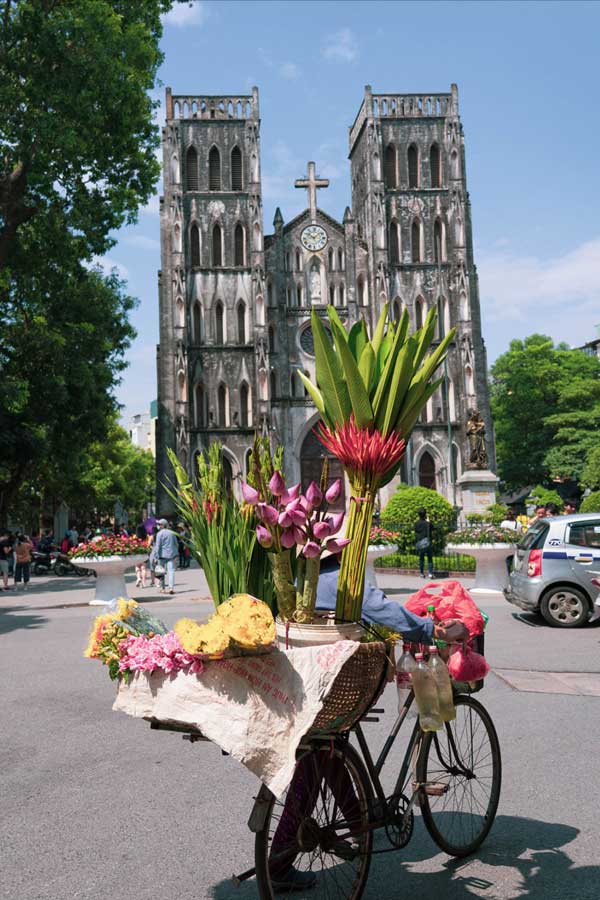
The walking route from the Hanoi Post Office to St. Joseph's Cathedral is not particularly long, yet it takes you past some of Hanoi's most remarkable architectural landmarks, historic monuments, and cultural attractions. It is an ideal journey for anyone wishing to experience the city's rich heritage at a leisurely pace before ending the walk at the cathedral, where delicious local food, charming cafés, and the vibrant atmosphere of Hanoi's Old Quarter await.
Tác giả
Temple of Literature, a proud historical architectural work of Hanoi in particular and Vietnam in general