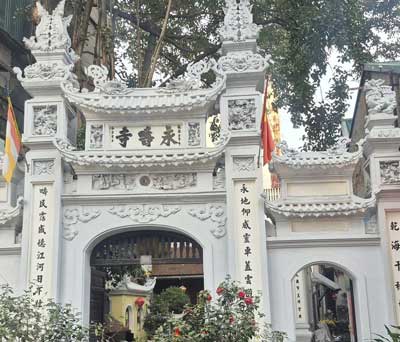
These pagodas are not large, as they are nestled within densely populated neighborhoods that have existed for generations. They have long been preserved by local residents as cultural landmarks. Visiting these sites allows you not only to admire centuries-old architecture but also to gain insight into the spiritual traditions of the people living in Hanoi's Old Quarter.
Most of these pagodas have histories spanning hundreds or even thousands of years. Although many have been restored or rebuilt over the centuries, their original names have been preserved and remain in use today.
5 Tips for Foreign Visitors When Visiting Pagodas in Vietnam
- 1. Dress respectfully: Pagodas are places of worship and religious practice, so visitors should wear modest clothing. Avoid tank tops, off-the-shoulder garments, shorts, or overly revealing attire.
- 2. Maintain a respectful attitude and speak quietly: While visiting a pagoda, avoid speaking loudly, laughing excessively, or creating unnecessary noise.
- 3. Follow the rules of worship areas: At some pagodas, visitors may be required to remove hats, sunglasses, or shoes before entering the main sanctuary.
- 4. Do not touch statues or sacred objects: Buddha statues, Bodhisattva statues, bronze bells, offerings, and religious artifacts often carry significant spiritual and historical value.
- 5. Respect worshippers and religious rituals: If you encounter people burning incense, chanting, or praying, keep an appropriate distance and avoid standing directly in front of altars while taking photographs.
Below are five ancient pagodas that you should visit if you would like to gain a deeper understanding of the history and culture of Hanoi's Old Quarter in particular and Hanoi as a whole.
1 - Ly Quoc Su Pagoda
This is one of the oldest and most famous pagodas in Hanoi, holding great significance for local residents.
- Address: 50 Ly Quoc Su Street
The pagoda was built during the Later Le Dynasty to commemorate and worship Nguyen Minh Khong, a renowned Buddhist monk who lived during the Ly Dynasty. He was not only an influential monk who helped spread Buddhism but was also revered as a skilled physician who made important contributions to traditional Vietnamese medicine. Despite numerous restorations throughout history, the pagoda has preserved its traditional architectural values and many precious artifacts.
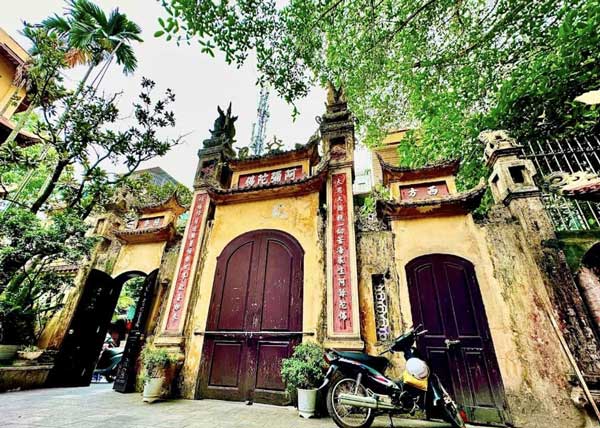
The architecture of Ly Quoc Su Pagoda reflects the distinctive style of Northern Vietnamese pagodas, featuring a three-entrance gate, a courtyard, and worship halls arranged harmoniously within a compact yet solemn space. Curved tiled roofs, Buddha statues, lacquered boards, parallel sentences, and the fragrance of incense create a peaceful and timeless atmosphere amid the bustling city.
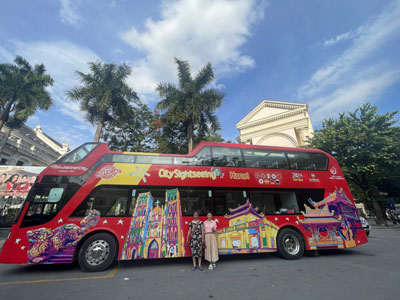
>> Explore Hanoi by Double-Decker Bus
2 - Ba Da Pagoda
Amid the bustling streets of Hanoi's Old Quarter, Ba Da Pagoda offers a tranquil setting and has become a familiar destination for both locals and visitors seeking peace in the heart of the city.
- Address: No. 3 Nha Tho Street
- Recognized as a National Historical and Cultural Relic
The pagoda was built during the reign of King Le Thanh Tong in the 15th century. According to local legend, during the construction of the Thang Long Citadel, residents discovered a stone statue and built a shrine to worship it. This eventually developed into the pagoda known today as “Ba Da Pagoda” (Stone Lady Pagoda). Through centuries of historical change, the pagoda has undergone several restorations while retaining its distinctive cultural and architectural heritage.
Its architecture follows the traditional Northern Vietnamese pagoda style, featuring a three-entrance gate, an inner courtyard, and worship halls arranged harmoniously within an enclosed compound. Moss-covered tiled roofs, ancient Buddha statues, lacquered boards, parallel sentences, and the scent of incense contribute to its solemn and historic atmosphere.
3 - Cau Dong Pagoda
Cau Dong Pagoda is a spiritual landmark deeply connected to the heritage of ancient Thang Long, standing quietly among busy shops and streams of pedestrians in the heart of the historic city.
- Address: 38B Hang Duong Street
According to historical records, Cau Dong Pagoda dates back many centuries and is closely associated with the eastern gate area of the old Thang Long Citadel. Its name originates from its location near this former city gate.
Despite undergoing several renovations over time, the pagoda continues to preserve its traditional architectural character and many artifacts of historical and artistic value.
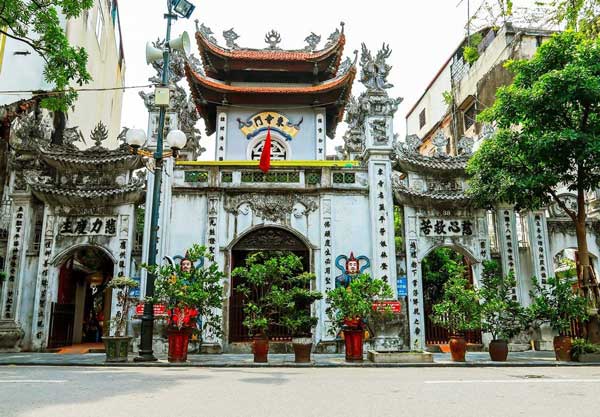
Passing through the gate, visitors are welcomed into a serene space featuring ancient curved roofs, wooden columns, lacquered boards, parallel sentences, and decorative details characteristic of Northern Vietnamese Buddhist architecture. Although modest in scale, Cau Dong Pagoda impresses with its harmonious layout and well-preserved historical charm.
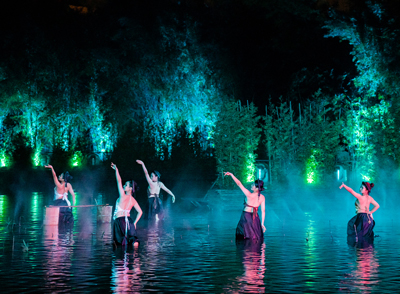
>> Enjoy a Traditional Water Puppet Show in Hanoi
4 - Phap Bao Tang Pagoda
This small pagoda possesses a simple beauty while embodying rich cultural and spiritual values.
- Address: 44 Hang Cot Street
The history of Phap Bao Tang Pagoda is closely linked to the development of the trading communities that once flourished around one of Hanoi's historic city gates. Through various periods of change in Hanoi, the pagoda has remained an important place of worship for local residents.
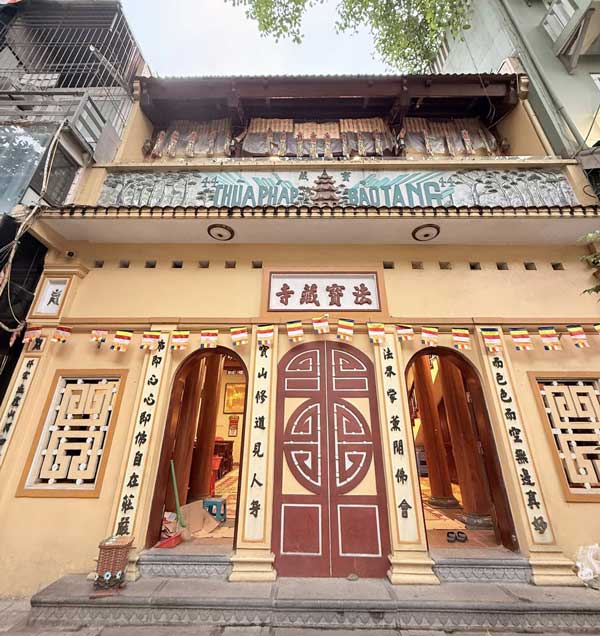
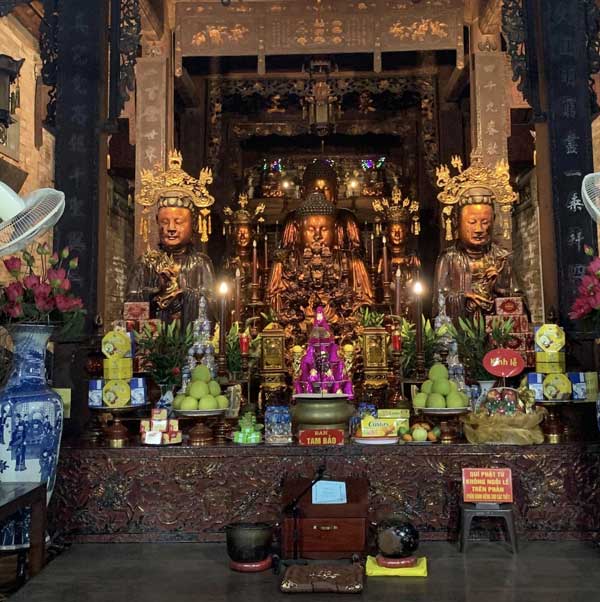
Its architecture is modest and traditional, featuring ancient tiled roofs, wooden columns, altars, and decorative elements that create an atmosphere that is both solemn and welcoming. Inside the main hall, Buddha statues are arranged according to Mahayana Buddhist traditions, accompanied by numerous religious objects of artistic and spiritual significance. The peaceful surroundings offer a welcome escape from the busy streets outside.
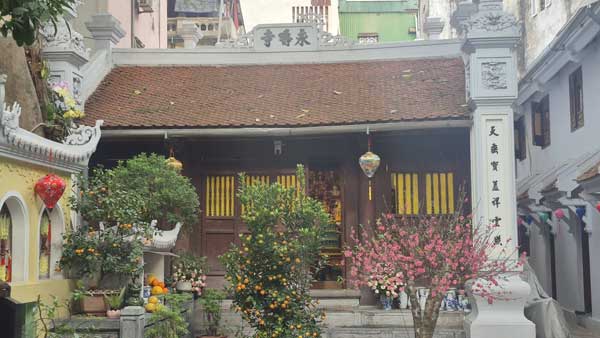
5 - Vinh Tru Pagoda
Nestled on Hang Luoc Street, famous for Hanoi's traditional Lunar New Year flower market,
- Address: 59 Hang Luoc Street
The name “Vinh Tru” conveys the idea of permanence and endurance, reflecting the aspirations of past generations for peace, prosperity, and the continuation of traditional values.
The architecture of the pagoda is characteristic of the folk pagodas found throughout Hanoi's Old Quarter. Its moderate-sized grounds are arranged harmoniously, featuring weathered tiled roofs, wooden columns, ornate doors, and decorative carvings that create a simple yet dignified appearance. Inside the main hall, worship spaces are organized according to Buddhist traditions, accompanied by altars dedicated to elements of traditional Vietnamese folk beliefs.
You can visit all of these pagodas in a single day, or simply choose the one closest to your accommodation. Since many of the pagodas share similar architectural characteristics, you may also wish to spend time exploring some of the well-preserved ancient houses in the Old Quarter, where visitors can discover how Hanoi residents lived and worked in centuries past.
Tác giả
Temple of Literature, a proud historical architectural work of Hanoi in particular and Vietnam in general