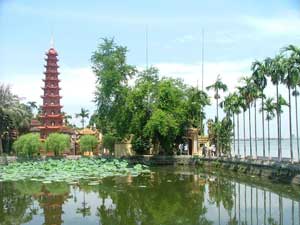
Hanoi is home to many ancient temples, but none are as iconic as Tran Quoc Pagoda. With a history spanning over 1500 years, this historic site showcases timeless architecture and offers stunning views of West Lake. Visitors, both locals and international tourists, can explore the pagoda free of charge any day of the week.
If you visit on the 1st or 15th day of the lunar month, you’ll likely encounter many locals attending rituals. Especially during the Lunar New Year, Tran Quoc Pagoda remains open throughout the night to accommodate worshippers. Renowned for its cultural and spiritual significance, the pagoda is believed to bring good fortune to those who pray here.
Located just 4 km from Hanoi’s Old Quarter, Tran Quoc Pagoda is a convenient stop to combine with a scenic tour of West Lake. Visitors can easily reach the pagoda by taxi or even cycle, enjoying nearby historic sites like the One Pillar Pagoda, Thang Long Imperial Citadel, and Hanoi Flag Tower along the way.
Tips for Visiting Tran Quoc Pagoda
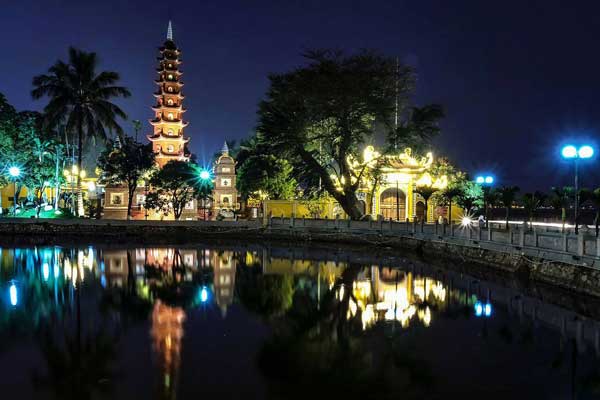
To fully enjoy your visit, consider coming at sunrise or sunset when the serene atmosphere is at its peak, and the lake reflects breathtaking hues. As with other sacred sites in Vietnam, remember to wear modest clothing; avoid short skirts or shorts to respect the cultural norms.
Tran Quoc Pagoda is located on Thanh Nien Road, one of Hanoi’s most beautiful streets, with West Lake on one side and Truc Bach Lake on the other. The pagoda itself sits on a small islet in West Lake, making it easily visible from anywhere along the road.
Architectural Highlights of Tran Quoc Pagoda
1. The Entrance to Tran Quoc Pagoda
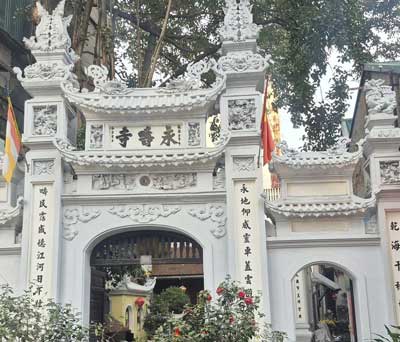
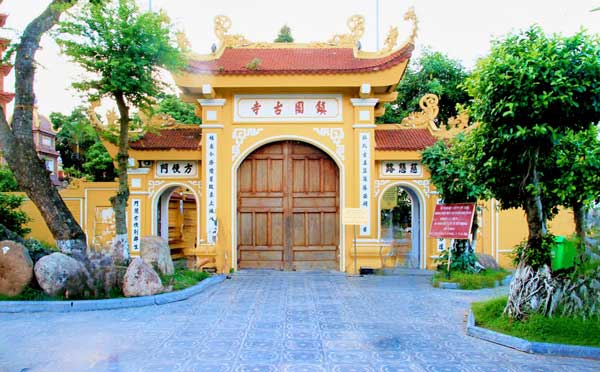
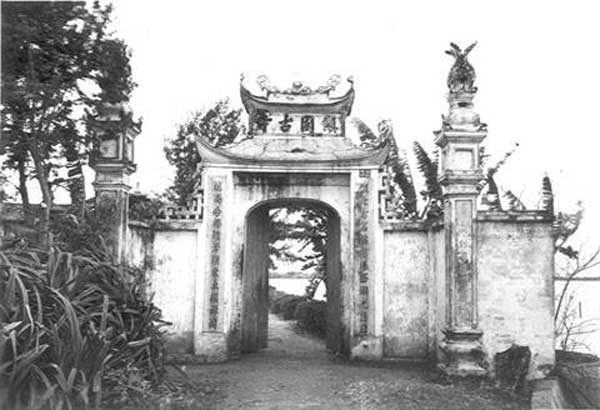
From 46 Thanh Nien Road, you’ll cross a small bridge leading to the pagoda grounds. This gracefully curved bridge spans West Lake and immediately sets a tranquil tone. Beyond the bridge, you’ll find the traditional three-gate entrance with its signature curved roof tiles. Above the gate, the Han characters "Trấn Quốc Tự" (Tran Quoc Temple) are inscribed in elegant calligraphy, symbolizing the temple’s role in safeguarding the nation’s peace.
2. The Front Hall – A Space of Reverence
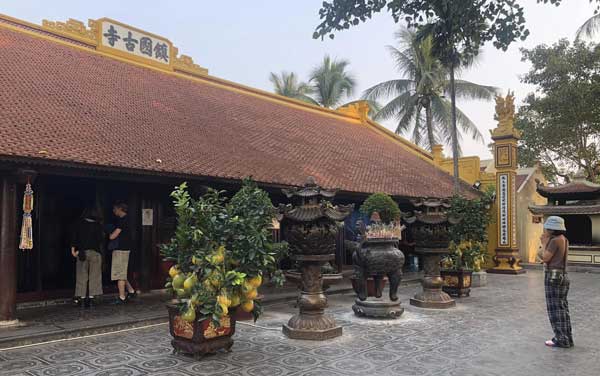
The Front Hall is the first structure you’ll encounter after passing through the main gate. Its wide, curved roof is supported by large wooden columns intricately carved with dragon, cloud, and lotus motifs—classic symbols of Buddhism. The open and airy design allows natural light to fill the space, fostering a connection between visitors and Buddhist teachings.
>> The Historical Site of the Temple of Literature and Imperial Academy
3. The Lotus Tower
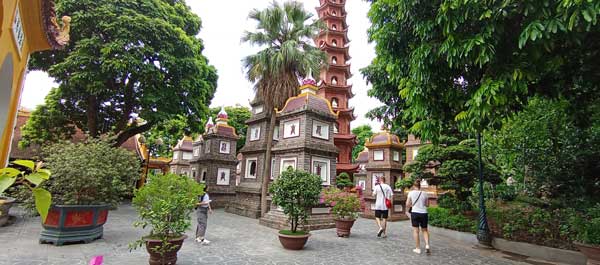
The Lotus Tower, or Lục Độ Đài Sen Stupa, is the most striking feature of Tran Quoc Pagoda, constructed in 1998. Standing 15 meters tall with 11 tiers, the hexagonal tower symbolizes the "Six Perfections" in Buddhism: generosity, discipline, patience, diligence, meditation, and wisdom—paths to enlightenment. Each tier houses statues of Amitabha Buddha made from precious stone, while the top of the tower features a large lotus symbolizing purity and enlightenment.
4. The Main Shrine (Upper Hall)
The Main Shrine is the heart of Tran Quoc Pagoda, located behind the Front Hall. Its architecture reflects a sense of majesty and antiquity, with intricately carved details of dragons and phoenixes on its curved tiled roof. Inside, the shrine houses multiple altars dedicated to various Buddhas and Bodhisattvas, including statues of Buddha Shakyamuni and Avalokiteshvara (Goddess of Mercy), crafted from precious wood or bronze.
Behind the shrine is a garden of ancient stupas, where relics of past monks are enshrined. These stupas, made of stone and brick, bear the hallmark of traditional Vietnamese architecture.
The Bodhi Tree
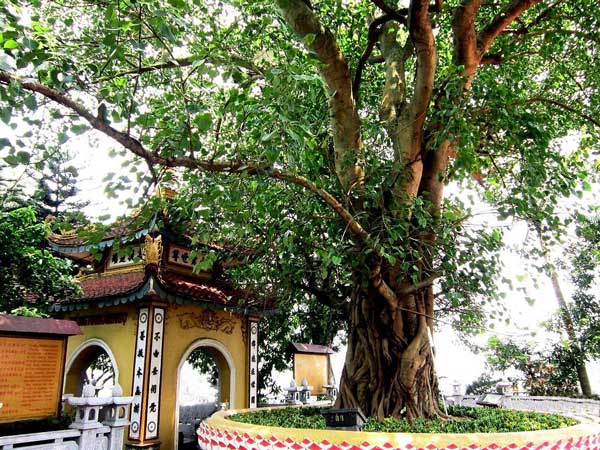
A sacred Bodhi tree, gifted by the President of India in 1959, stands within the pagoda’s grounds. This tree is a descendant of the Bodhi tree under which Buddha attained enlightenment. Its large canopy provides shade and serves as a place for visitors to meditate and reflect on life’s spiritual journey.
History of Tran Quoc Pagoda
With its rich history, Tran Quoc Pagoda remains a spiritual icon for Hanoi's residents across all eras.
>> One Pillar Pagoda - A Symbol of Hanoi
- 541-548 AD: Initially constructed during the reign of King Ly Nam De, the temple was named "Khai Quoc" (Nation Founding Temple) and was originally located near the Red River in Yên Hoa Village. It is the oldest temple in Hanoi.
- 1615: Due to riverbank erosion, the temple was relocated to its current site on the Kim Ngu Peninsula, West Lake, and renamed "Tran Quoc Pagoda."
- 1820-1841: The pagoda was restored and became a vital Buddhist center in the Thang Long Imperial Citadel.
- 1959: The President of India presented a sacred Bodhi tree to the pagoda as a gesture of goodwill.
- 1962: Tran Quoc Pagoda was recognized as a National Historical and Cultural Site, affirming its significance in Vietnamese history and spirituality.
- 1998: The Lotus Tower was constructed, adding to the pagoda’s architectural splendor.
- 2016: Tran Quoc Pagoda was listed by Daily Mail as one of the 16 most beautiful temples in the world, praised for its serene beauty and stunning location by West Lake.
As the oldest temple in Hanoi, Tran Quoc Pagoda is a treasure trove of history, spirituality, and beauty. It is an essential destination for anyone visiting the capital city of Vietnam.
Tác giả
Temple of Literature, a proud historical architectural work of Hanoi in particular and Vietnam in general