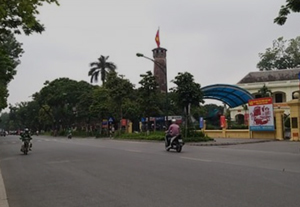
The street begins at the intersection of Hang Bong and Cua Nam and stretches to Ba Dinh Square. Unlike the bustling sidewalks of the Old Quarter, Dien Bien Phu Street has wide pavements, perfect for walking.
On both sides of the road stand rows of shady African mahogany trees, interspersed with French-style buildings such as the Vietnam Military History Museum, Ly Thai To Statue, Hanoi Flag Tower, and many elegant colonial villas.
If you visit Hanoi in autumn, you might also encounter bicycles laden with seasonal flowers – simple yet poetic images that capture the scent and charm of Hanoi’s fall. In the past, the street was called Avenue de la République, but after 1954 it was renamed Dien Bien Phu to honor and commemorate the glorious victory that “resounded across five continents and shook the world.”
Highlights of Dien Bien Phu Street
One of the few streets in Hanoi ideal for walking, this avenue lets you admire French colonial architecture, visit Lenin Park and the Hanoi Flag Tower, and stop by several stylish cafés.
Hanoi Flag Tower
- Address: 28C – Dien Bien Phu Street
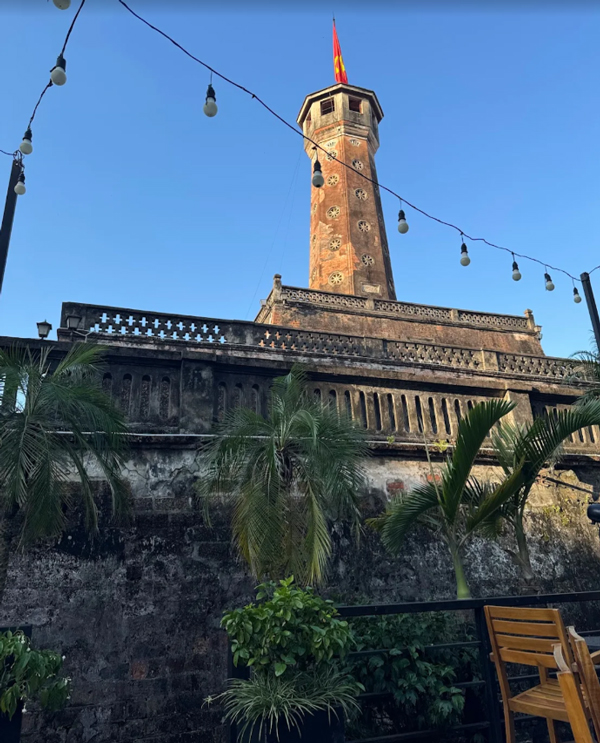
As one of Hanoi’s most iconic landmarks, the Flag Tower was built in 1812 and remains well-preserved to this day. The structure consists of three tiers and a tower, standing 41 meters tall. Visitors can climb 54 steps to the observation deck for panoramic views of Ba Dinh Square, Phan Dinh Phung Street, Ho Chi Minh Mausoleum, and the tiled rooftops of the Old Quarter.
History of Hanoi Flag Tower
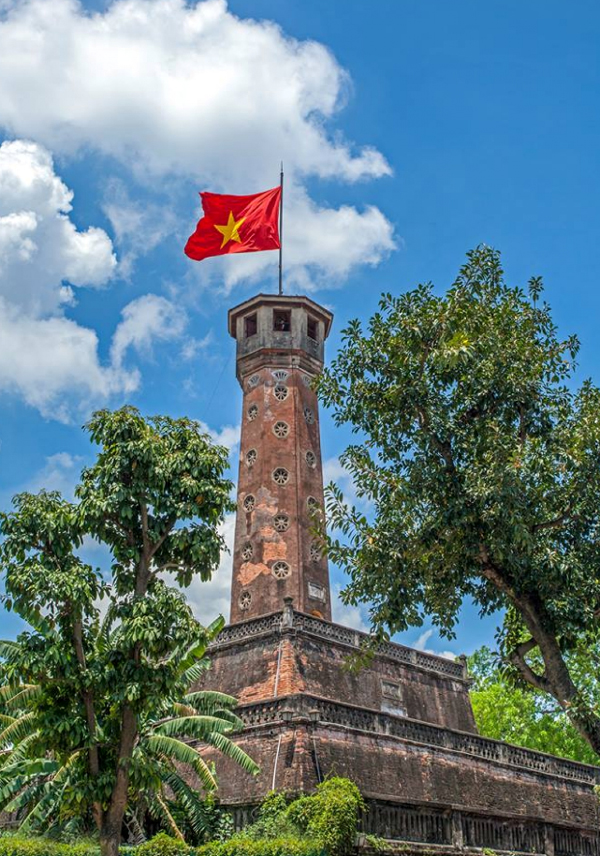
• The tower was built during the reign of Emperor Gia Long, entirely made of red bricks – solid, symmetrical, and showcasing the refined military architecture of early 19th-century Vietnam.
• In 1897, the French destroyed Hanoi Citadel but preserved the Flag Tower as a military observation post.
• In 1954, after Hanoi’s liberation, the red flag with a golden star was raised high atop the tower — becoming a sacred symbol of freedom and independence.
>> Hanoi Flag Tower: A 200-Year-Old Historical Relic
French Colonial Villas
Walking along Dien Bien Phu Street, you’ll see many French colonial villas built in the early 20th century. Yellow walls, mossy green shutters, and terracotta-tiled roofs give this street its distinctive, timeless charm.
Most of these buildings now serve as embassies or government offices, so visitors cannot enter. Still, a stroll down the street — gazing at the weathered yellow walls and elegant green windows — feels like stepping back into a historical period when the French left a lasting mark on Hanoi’s architecture. History of the French Villas
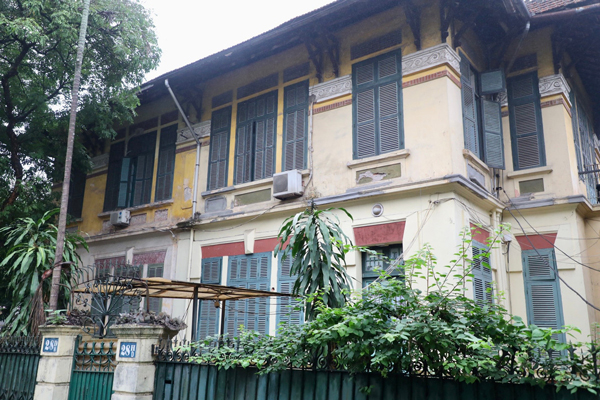
In the early 20th century, the French planned and built the administrative area of “colonial Hanoi.” The city was divided into two parts: the traditional Old Quarter of Vietnamese merchants and the newly developed French Quarter, featuring wide tree-lined boulevards surrounding Dien Bien Phu – Hoang Dieu – Tran Phu – Phan Dinh Phung – Le Hong Phong streets. Hundreds of villas were constructed in neoclassical and Art Deco styles, blending European aesthetics with local materials. Sloping tiled roofs, wooden shutters, wrought-iron balconies, and mossy yellow facades all contribute to the street’s refined yet nostalgic elegance.
Lenin Park
Originally built during the French colonial era, the park was first called Canh Nong Garden and later renamed Chi Lang Garden. In 2003, it officially became Lenin Park to honor the Russian revolutionary leader. Though not large, the park is filled with lush greenery — tall trees and neatly trimmed plants that create a refreshing, peaceful atmosphere. The air here is fresh, and the gentle fragrance of grass and flowers lingers. At the park’s center stands the Lenin Statue, facing directly toward the Hanoi Flag Tower.
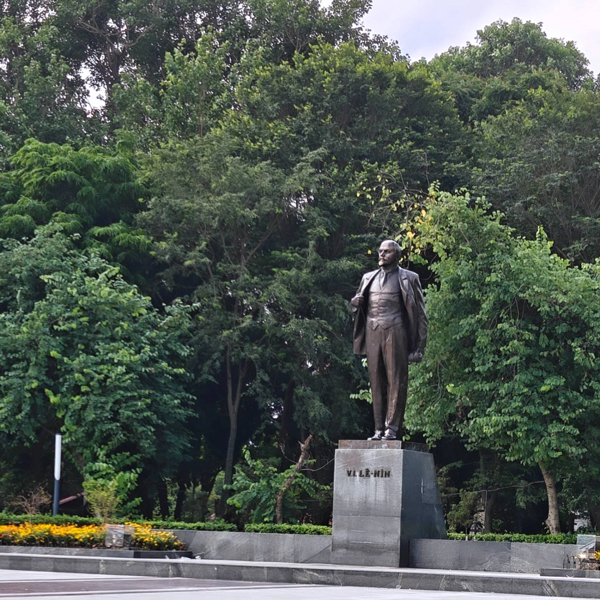
Enjoy Coffee on Dien Bien Phu Street
There are two particularly chill coffee spots along Dien Bien Phu Street — one located right at the foot of the Hanoi Flag Tower, and the other at the famous Train Street.
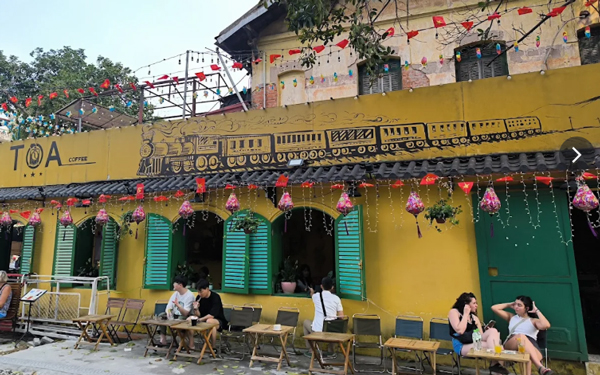
- Train Street Café – 3 Dien Bien Phu Street
A unique experience every visitor to Hanoi should try. While most cafés along the railway are located on Phung Hung Street, one special spot — TOA Coffee — sits right beside the tracks on Dien Bien Phu Street. Designed like a cozy train carriage, TOA Coffee offers a warm, quiet space. You can sit outside to watch the train pass by, or stay indoors by the window to feel the thrill as the rumbling sound of the train approaches. The menu isn’t vast, but every drink is crafted with care. Each cup of coffee is beautifully decorated with hand-drawn flowers or leaves — artistic, delicate, and perfect for your next “train café” photo moment. The flavors are rich, the presentation elegant — making this a must-stop for coffee lovers and photographers alike.
- Highlands Coffee Cart Hoang Thanh – 28A Dien Bien Phu Street
This café’s location is truly special — right next to the Hanoi Flag Tower and facing Lenin Park. The spacious outdoor seating is surrounded by greenery, offering a relaxing open-air vibe. Drinks are of good quality, with the best options being freeze blends, fruit teas, and the signature golden lotus tea. The café also serves a selection of pastries and lemon tarts, perfect for a light afternoon treat.
- From Dien Bien Phu Street, you can easily walk to many of Hanoi’s most famous attractions:
- Thang Long Imperial Citadel: 19C Hoang Dieu
- One Pillar Pagoda: 101 Chua Mot Cot
- Ho Chi Minh Mausoleum: 1 Hung Vuong
- Cua Bac Church: 56 Phan Dinh Phung
Strolling along Dien Bien Phu Street, admiring old French villas, and sipping coffee in unique spaces allows you to feel the deep connection between history, culture, and the timeless beauty of Hanoi — where the past and present blend harmoniously. Here, Hanoi reveals itself as elegant, poetic, and full of soul — like a never-ending love song of time.
Tác giả
Temple of Literature, a proud historical architectural work of Hanoi in particular and Vietnam in general