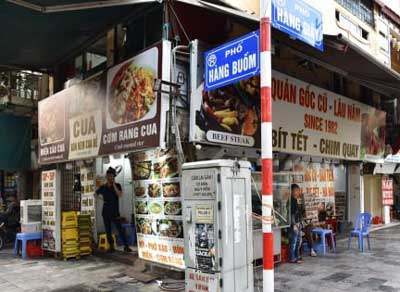
36 old streets in Hanoi may look quite similar at first glance, with their narrow, long, 2–3-story tube houses. Most were built during the French colonial period or earlier, and all are used for trade and business. However, if you take time to explore more deeply, you’ll discover that each street specializes in its own type of goods and has its own unique stories and characteristics. Hàng Buồm Street is no exception — a street filled with Vietnamese specialties, and among the bustling stores stand ancient historical landmarks.
- Street length: 300m, width: 7m
- Walking street: Every Friday, Saturday, and Sunday
History of Hàng Buồm Street
>> Thang Long Citadel Hanoi
Hàng Buồm Street dates back to the time when the Thăng Long Citadel was being constructed. According to legend, during the construction process, the city walls kept collapsing. The deity Long Đỗ transformed into a white horse to guide the king in choosing the correct direction to build the walls, which finally held. As a result, the king built the Bạch Mã Temple on Hàng Buồm Street.
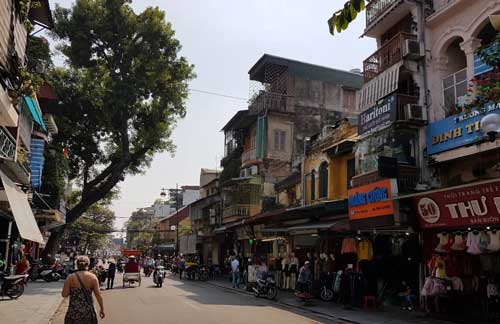
- The name “Hàng Buồm” (Sail Street) originates from the fact that local residents traditionally sold sails, mats, and ship-related items.
From the 17th to 19th centuries: The arrival of Chinese immigrants turned Hàng Buồm into the busiest commercial street in eastern Thăng Long. They opened herbal medicine shops, fabric stores, tea houses, bakeries, and candy workshops, bringing with them distinct customs and spiritual practices.
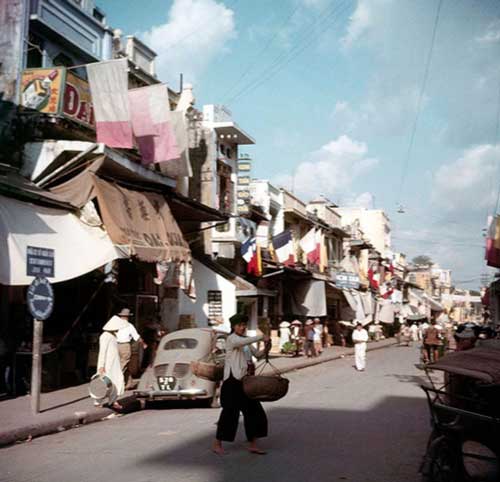
Hang Buom Street in the Past
In the 19th – early 20th centuries: The French restructured Hàng Buồm Street, expanding urban planning. Many two-story houses with wooden balconies and arched doors were built in a Franco-Chinese style and still stand today.
The street became a hub for tea houses, pubs, and eateries, standing out in Hanoi’s Old Quarter.
From the late 20th century to the present: Hàng Buồm earned the nickname "Candy and Snack Street," supplying dry goods and traditional holiday treats for all of Hanoi and the northern region.
Ancient Architecture on Hàng Buồm Street
Many old houses still remain on Hàng Buồm, mostly built during the French era in a blend of French and Chinese architecture. These tube houses are narrow in front but long in depth. They are typically 2–3 stories tall with balconies on each floor. While the exteriors reflect French style, the interiors combine Vietnamese and Chinese influences. Notably, the street is home to two important temples: Bạch Mã Temple and Quang Đế Temple.
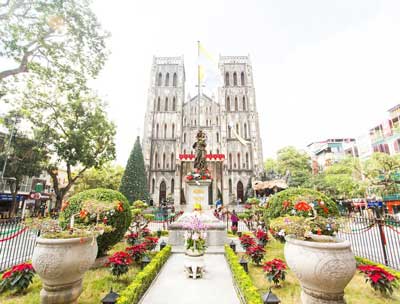
>> St. Joseph Cathedral Hanoi
Bạch Mã Temple
Bạch Mã Temple was built by King Lý Thái Tổ in the 9th century. Together with three other temples—Voi Phục, Kim Liên, and Quán Thánh—it forms the "Four Sacred Temples" (Tứ Trấn) that protect Thăng Long.
- Address: No. 76 Hàng Buồm Street
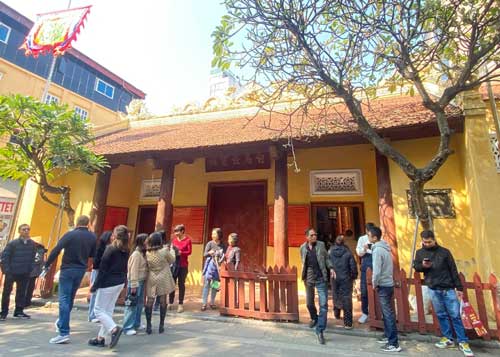
Bạch Mã Temple is not large but features distinctive architectural elements from the Lê and Nguyễn dynasties. It uses ironwood, blue stone, crescent-shaped tiles, and intricate carvings of dragons, unicorns, turtles, and phoenixes.
Inside the temple stands a large white horse statue, symbolizing the deity Long Đỗ. The temple also preserves numerous beautiful horizontal lacquered boards and parallel sentences in ancient Chinese script, reflecting a fusion of Confucianism, Buddhism, and Taoism.
It retains many royal decrees from the Lê and Nguyễn dynasties that conferred the title of "National Guardian Deity" upon Long Đỗ.
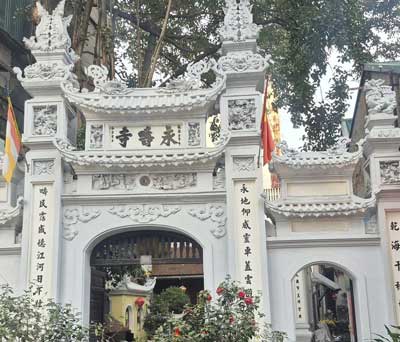
Quang Đế Temple
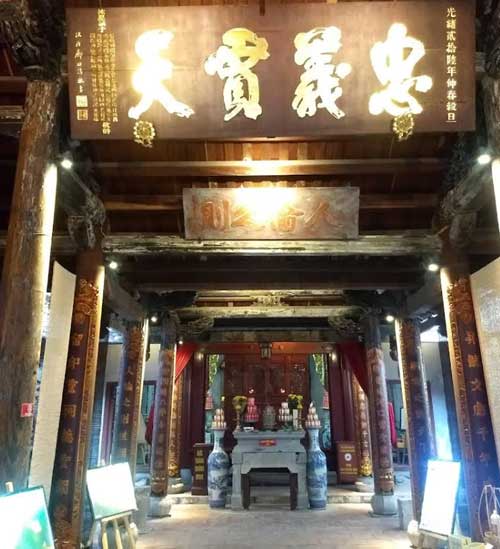
Quang Đế Temple was built around the 18th–19th centuries by the Cantonese Chinese community living on Hàng Buồm Street. It was originally part of the Cantonese Assembly Hall, where Chinese immigrants gathered for worship and community events. Today, the temple still preserves its original Chinese architectural features and is one of the few remaining temples dedicated to Guan Gong (Quan Công) in Hanoi.
- Address: No. 28 Hàng Buồm Street
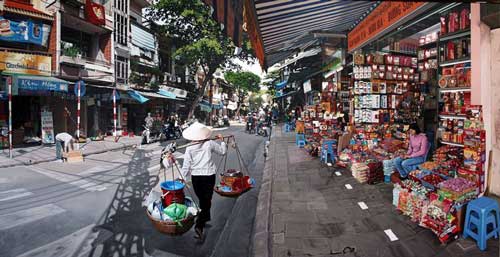
Beyond its historical landmarks, Hàng Buồm is also a great place to shop for traditional Hanoi gifts such as various types of preserved fruits (ô mai), green rice cakes (bánh cốm), mung bean cakes, peanut candy, sesame candy, and more — all classic snacks that have been popular in the Old Quarter for generations.
For food lovers, the street is also known for delicious Vietnamese dishes like fresh spring rolls (phở cuốn), fried spring rolls (nem rán), steamed rice rolls (bánh cuốn), sizzling pancakes (bánh xèo), grilled pork with noodles (bún chả), three-color sweet soup (chè ba màu), and traditional milk tea.
Hàng Buồm Street is undoubtedly one of the most fascinating stops on your journey to discover the charm of Hanoi’s 36 old streets.
Tác giả
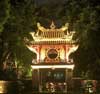
Temple of Literature, a proud historical architectural work of Hanoi in particular and Vietnam in general