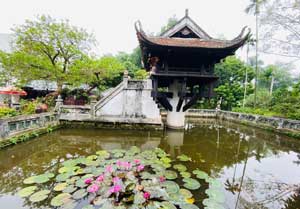
Hanoi, with its 1,000 years of history as the capital of various Vietnamese feudal dynasties, is home to numerous historical landmarks, and the One Pillar Pagoda is one of the most iconic among them.
Though modest in size, the pagoda features a unique lotus-shaped architecture and holds significant spiritual meaning for Buddhist followers. Built in 1049, the entire structure is supported by a single pillar, which inspired its name. The pagoda is also known by other names, including Dien Huu Pagoda, Lotus Platform, or Mat Pagoda.
Situated within the historic Dien Huu Pagoda complex, the One Pillar Pagoda and the modern Dien Huu Pagoda were recognized as national cultural and historical relics in the first certification round in 1962. In 2012, the Asia Book of Records awarded the One Pillar Pagoda the title of "Asia's Most Unique Architecture."
As a result, the One Pillar Pagoda has long been considered a symbol of Hanoi and is one of the must-visit attractions for tourists exploring Vietnam's capital.
- Address: Located within the Ho Chi Minh Mausoleum Complex, One Pillar Pagoda Street, Ba Dinh District, Hanoi
- Ticket Price: Approximately $1 USD
- Opening Hours: 7:00 AM - 6:00 PM
The pagoda is situated near other prominent historical attractions, making it highly convenient for travelers. From Hanoi's Old Quarter, a popular area for international visitors, it's just over 2 kilometers away.
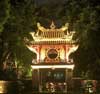
>> Other famous historical sites in Hanoi: Temple of Literature
- Travel options: You can take a taxi or a Grab ride for around 70,000 VND per trip.
- Walking route: Walking is also an excellent option as you'll pass by notable sites such as the Imperial Citadel of Thang Long, Hanoi Flag Tower, and Ho Chi Minh Mausoleum.
Exploring One Pillar Pagoda's Unique Architecture
Visiting One Pillar Pagoda, you’ll not only admire its one-of-a-kind lotus design but also enjoy the tranquil atmosphere surrounding the site. Remember to wear modest clothing suitable for visiting religious and historical sites in Hanoi.
Best Times to Visit
To avoid crowds, it's recommended not to visit during major holidays, the first day of the lunar month, or full moon days, as these times attract many local worshippers.
Key Highlights:
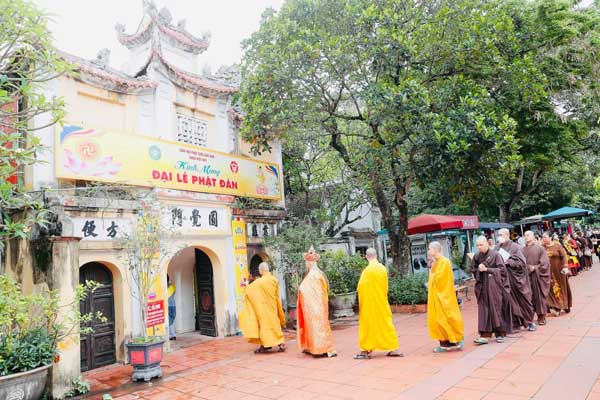
- The Entrance Gate:
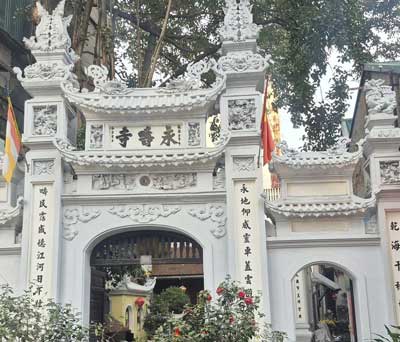
The pagoda’s gate is simple yet dignified, featuring traditional tiled roofs and wooden pillars that exude a sense of antiquity. Walking through it feels like stepping into a spiritual and cultural retreat.
- The Lotus Temple (Lien hoa dai):
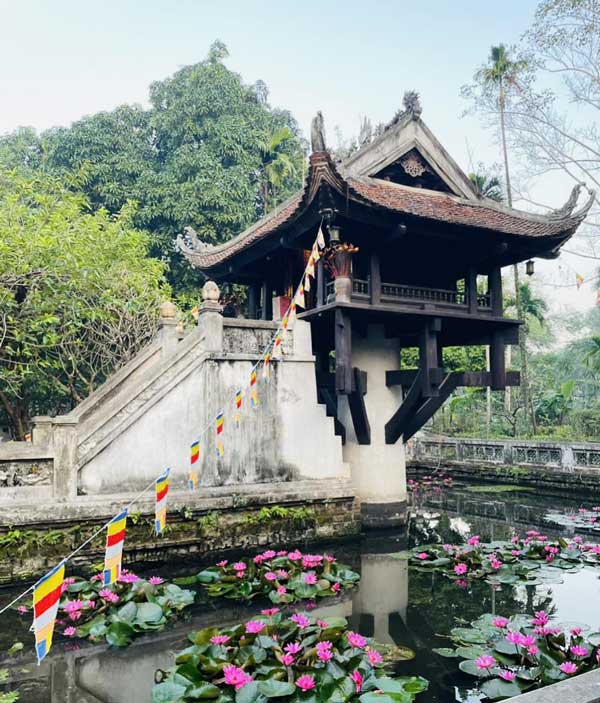
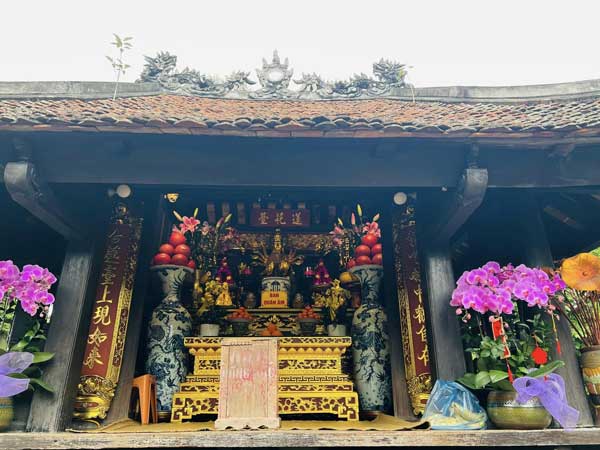
The main structure of One Pillar Pagoda is a small wooden shrine designed in the shape of a lotus, symbolizing purity and enlightenment in Buddhism. Its roof features curved eaves resembling lotus petals, with intricately carved dragon motifs symbolizing strength and sacredness.
- The Stone Pillar:
A solid stone pillar approximately 4 meters tall supports the entire pagoda. Its square cross-section represents stability and strength, embodying the spiritual foundation of Buddhist teachings.
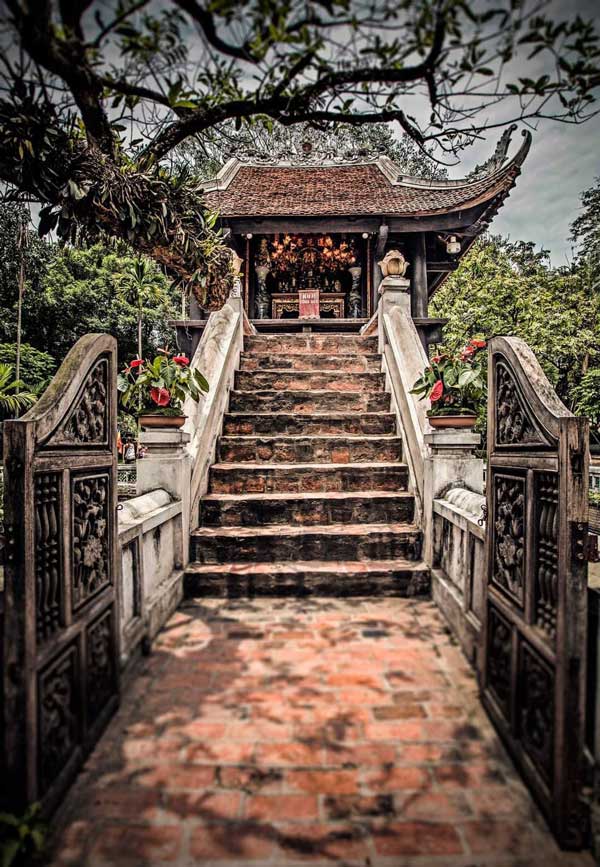
- The Staircase:
A small but sturdy staircase leads to the lotus shrine, representing the spiritual journey toward higher consciousness and inner peace. Climbing the steps slowly allows visitors to fully absorb the serene atmosphere.
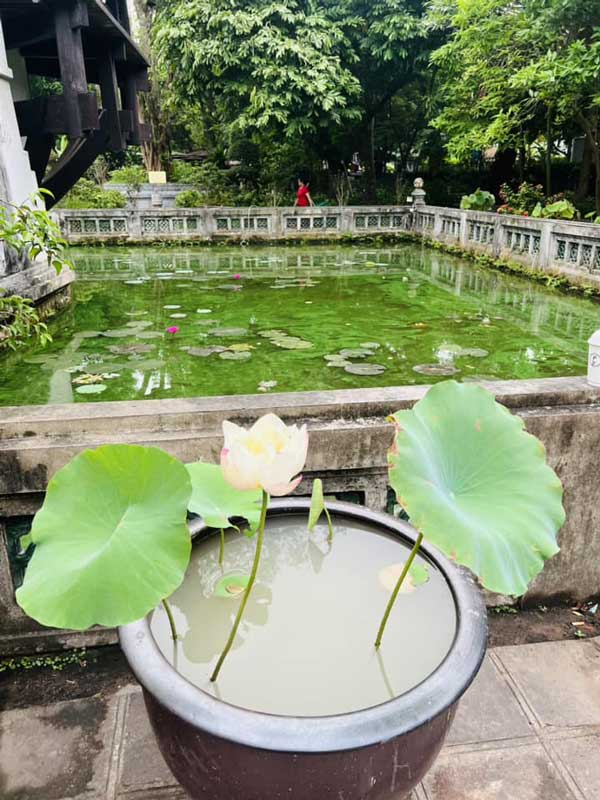
- Linh Chieu Pond:
Surrounding the pagoda is Linh Chieu Pond, symbolizing the lotus rising from muddy water. The still water reflects the pagoda's image, creating a harmonious and picturesque scene.
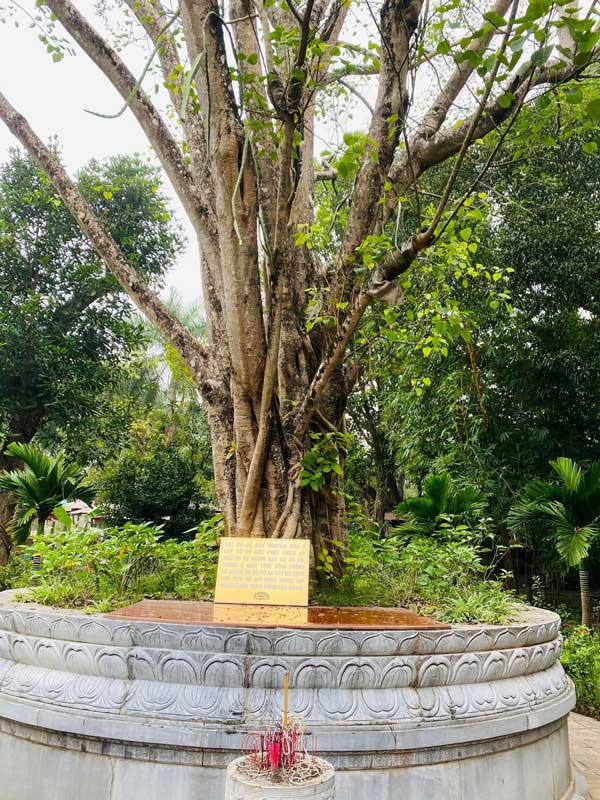
- The Bodhi Tree:
Planted in 1958, the sacred bodhi tree was a gift from the President of India, symbolizing wisdom and enlightenment. Resting under its shade, visitors can reflect on life and experience a profound sense of peace.
A Journey Through History
One Pillar Pagoda has stood for nearly a millennium, witnessing countless historical events. Though the current structure is a reconstruction, it preserves the original values and design envisioned during the Ly Dynasty.
- Legendary Origin:
The pagoda’s story began with Emperor Ly Thai Tong’s dream of the Bodhisattva Avalokitesvara handing him a lotus flower and blessing him with a son. Soon after, the queen gave birth to a prince. In gratitude, the emperor built a lotus-shaped pagoda and named it Dien Huu, meaning “long-lasting blessings.”
- Architectural Evolution:
Originally part of a larger Dien Huu temple complex, the pagoda underwent expansions during the Ly and Tran dynasties. Although much of the complex was destroyed over time, the One Pillar Pagoda remains a symbol of Hanoi’s rich history and culture.
- Reconstruction Efforts:
The pagoda has been renovated multiple times, with the most significant restoration undertaken in 1955, designed by architect Nguyen Ba Lang. Today’s structure reflects the architectural style of the Nguyen Dynasty.
Recognitions
- In 1962, the One Pillar Pagoda and Dien Huu Temple complex were recognized as a National Historical and Cultural Heritage Site.
- In 2012, the pagoda was awarded the Asian Record for the Most Unique Architectural Pagoda by the Asia Book of Records.
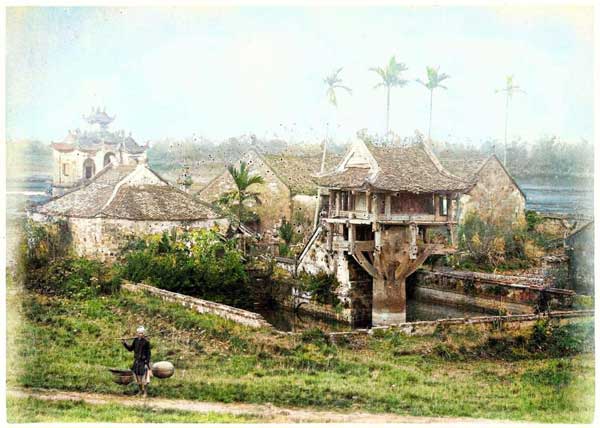
Image of One Pillar Pagoda in 1885 - 1888

One Pillar Pagoda is more than just an architectural masterpiece; it is a symbol of Vietnam’s enduring cultural and spiritual heritage. With its distinctive lotus design and rich history, this site has become a must-visit destination for anyone traveling to Hanoi. Don't miss the chance to experience the peaceful ambiance and learn about its fascinating past on your next visit to Vietnam’s capital.
Tác giả
Temple of Literature, a proud historical architectural work of Hanoi in particular and Vietnam in general