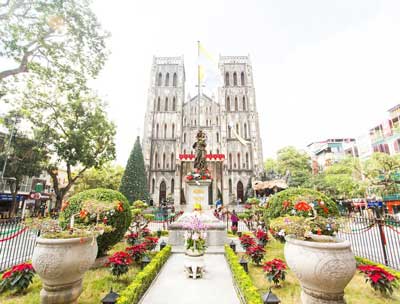
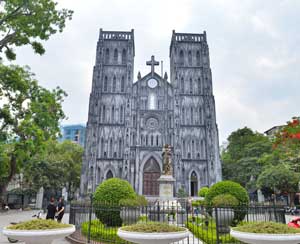
St. Joseph's Cathedral in Hanoi is not only a sacred place for Catholics but also one of the most famous attractions in the city. Built during the French colonial era and completed in 1887, the cathedral carries great historical value.
Located just a 5-minute walk from Hoan Kiem Lake, this iconic Gothic-style church is a symbol of Hanoi, surrounded by diverse street food experiences. After more than 100 years and several restorations, the cathedral has remarkably preserved its original architecture and functions.
The cathedral is not only a place of worship for Catholics, but also a popular destination for both locals and tourists to check in, explore, and enjoy the vibrant atmosphere in the heart of Hanoi.
- Address: 40 Nha Chung Street, Hoan Kiem, Hanoi
In front of the cathedral is the intersection of Nha Tho, Ly Quoc Su, and Nha Chung streets, making the front space spacious and convenient for visitors to take photos and explore.
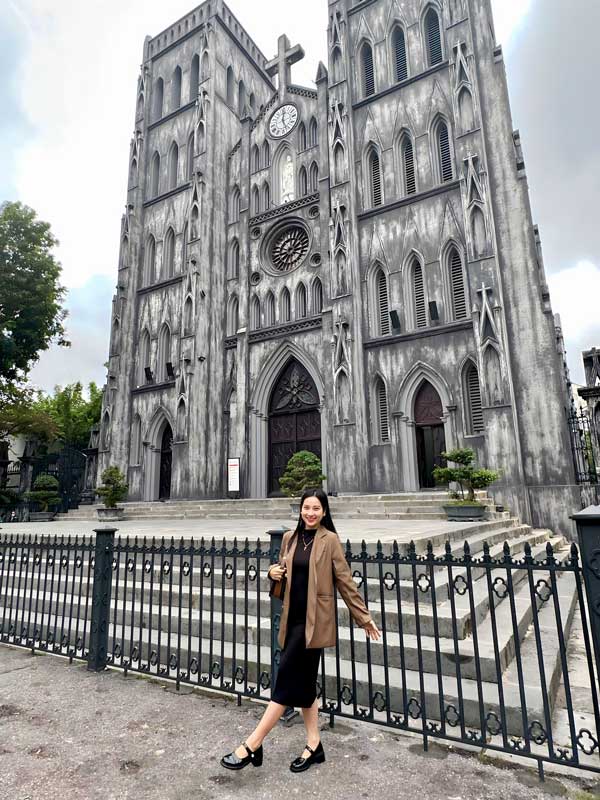
Must-visit attraction in Hanoi
The cathedral is open throughout the day. Visitors can attend mass or explore the cathedral freely. Weekday mass times are 5:30 AM and 6:00 PM (Saturday), and 6:15 PM on Sunday.
As one of the largest and oldest religious sites in Hanoi's Old Quarter open to the public, the cathedral welcomes thousands of visitors each day. Apart from admiring its majestic architecture, nearby street food also offers a delightful experience.
- Best time to visit the cathedral
It’s best to visit before 9 AM. On weekends, come even earlier due to the crowds attending mass and sightseeing. Another great time to visit is after 9 PM to enjoy the cathedral’s charm under night lights.
- Popular street food around the cathedral
The area around the cathedral is known for grilled fermented pork rolls (nem chua nướng), lemon iced tea (trà chanh), and fried dough cakes (bánh rán). In autumn, you’ll also find “xôi cốm” – green rice sticky rice wrapped in lotus leaves, a unique Hanoi delicacy.
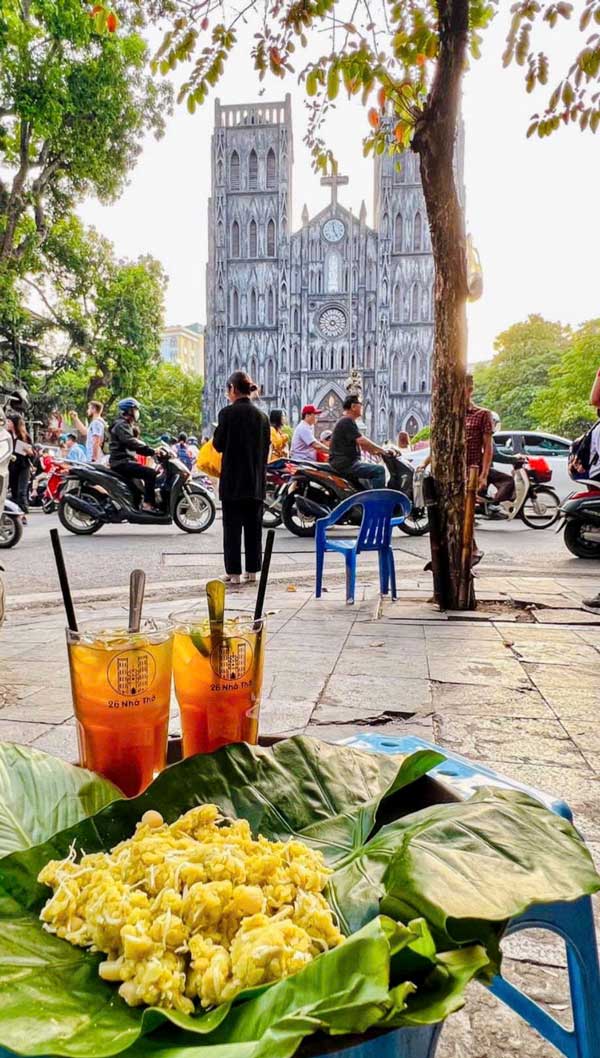
- How to get to the cathedral
If you're staying in the Old Quarter, it's easy to walk to the cathedral (within 1 km). From farther locations, taking a taxi is more convenient since parking for motorbikes around the cathedral can be limited.
>> From here, you can also easily visit other historical landmarks such as the One Pillar Pagoda and the Hanoi Flag Tower.
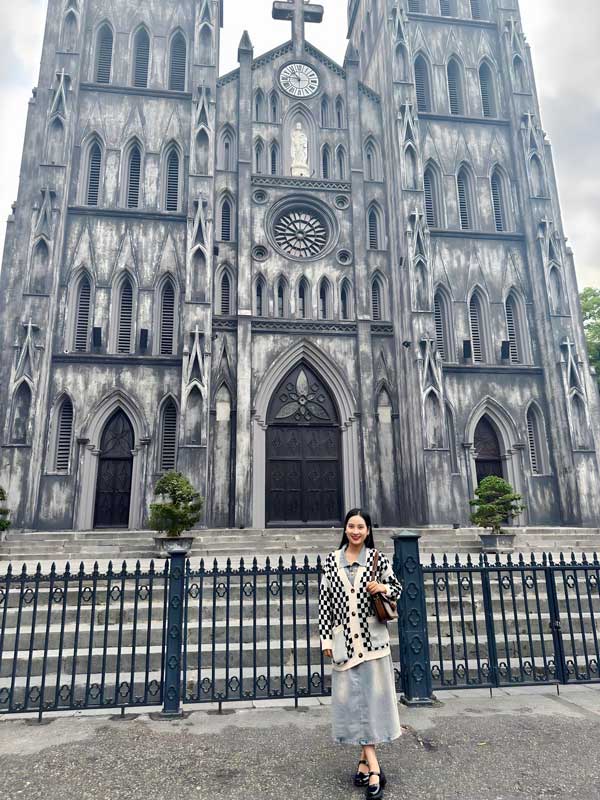
Ancient architecture of St. Joseph’s Cathedral
The cathedral follows a French Gothic architectural style, inspired by Notre-Dame de Paris. It was built using traditional Vietnamese materials and Western techniques.
The entire structure—including walls and twin bell towers—was made with handmade terracotta bricks and bonded with traditional mortar (lime – sugar – ground rice paper), ensuring its durability for over 130 years. Some foundations and statues are supported by green stone for added strength.
The doors, windows, and roof trusses are made of ironwood (gỗ lim), a precious and durable wood in Vietnam, resistant to the tropical climate. Some materials were imported from France, such as large stained glass windows along the sides that depict biblical stories in hand-painted colors, a hallmark of Gothic design.
The roof is covered with traditional fish-scale tiles in dark gray, enhancing the classic European look.
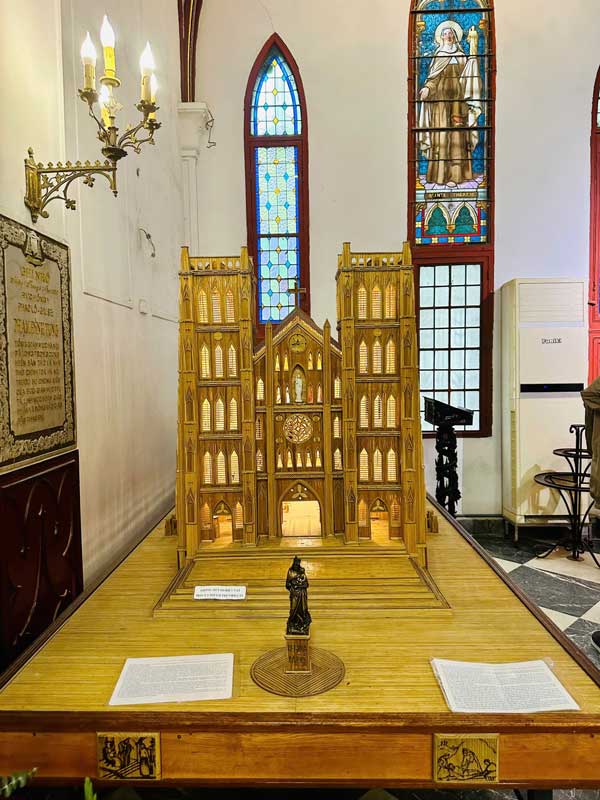
The cathedral’s space is divided into three main parts:
- Small square in front of the cathedral
Shaded by trees and surrounded by benches, this area blends history with modern life. In the center stands a granite statue of the Virgin Mary.
- Exterior architecture
The two bell towers, about 31.5 meters high, are symmetrical with a cross atop each. The central façade features a high arch doorway and a rose-shaped stained-glass window above. The wooden doors are intricately carved, made of dark-toned ironwood, and retain their strength over centuries.
- Interior seating and main hall
The interior consists of a central nave and two side aisles, following the traditional basilica layout. The high vaulted ceiling in dark brown wood creates a sacred and warm ambiance.
Large columns support the Gothic ceiling, adorned with intricate carvings. The natural light through the stained glass creates a mystical and peaceful atmosphere inside the cathedral.
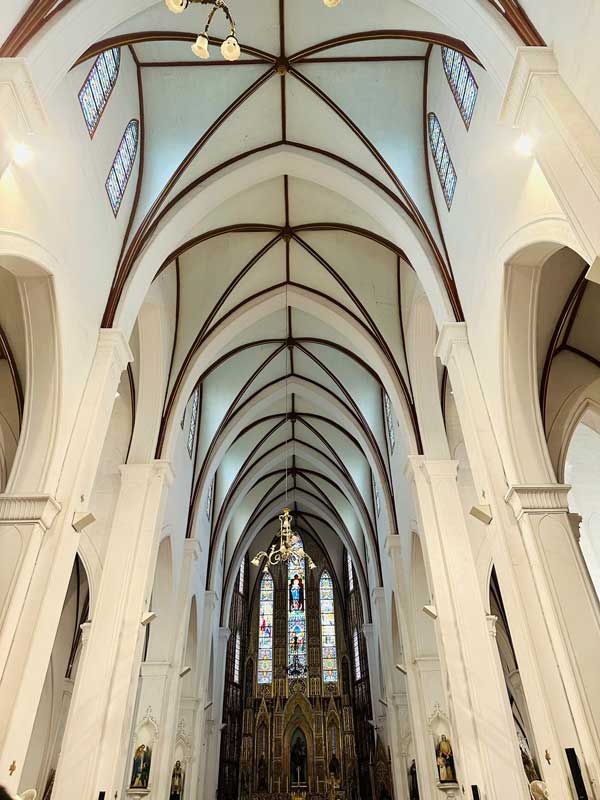
The main altar is made of stone and gilded wood, blending Vietnamese and Western styles. The statue of St. Joseph, the patron saint, is placed above, along with angels and Christian symbols. Along the walls are tall, narrow stained-glass windows illustrating scenes from the Bible, such as the Nativity and the Crucifixion. When sunlight passes through, the colors create a shimmering, magical effect.
History of St. Joseph’s Cathedral
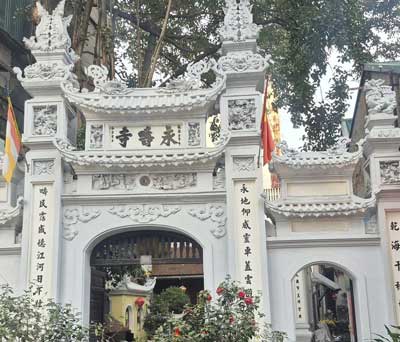
- Groundbreaking: 1884, built on the foundation of the ancient Bao Thien Pagoda from the Ly dynasty (11th–12th century), once a major Buddhist center of Dai Viet.
- Inauguration: December 24, 1887 (Christmas Eve)
- The cathedral took nearly 3 years to complete and became the first and largest Catholic church in Hanoi at the time. It has undergone several renovations, the most significant being in the 1990s and 2020s, focusing on preserving the façade, bell towers, stained glass, and wooden interior.
St. Joseph’s Cathedral is a religious icon and a cultural landmark where East meets West—a blend of Western faith and Vietnamese heritage that no visitor should miss when in Hanoi.
Tác giả
Temple of Literature, a proud historical architectural work of Hanoi in particular and Vietnam in general